

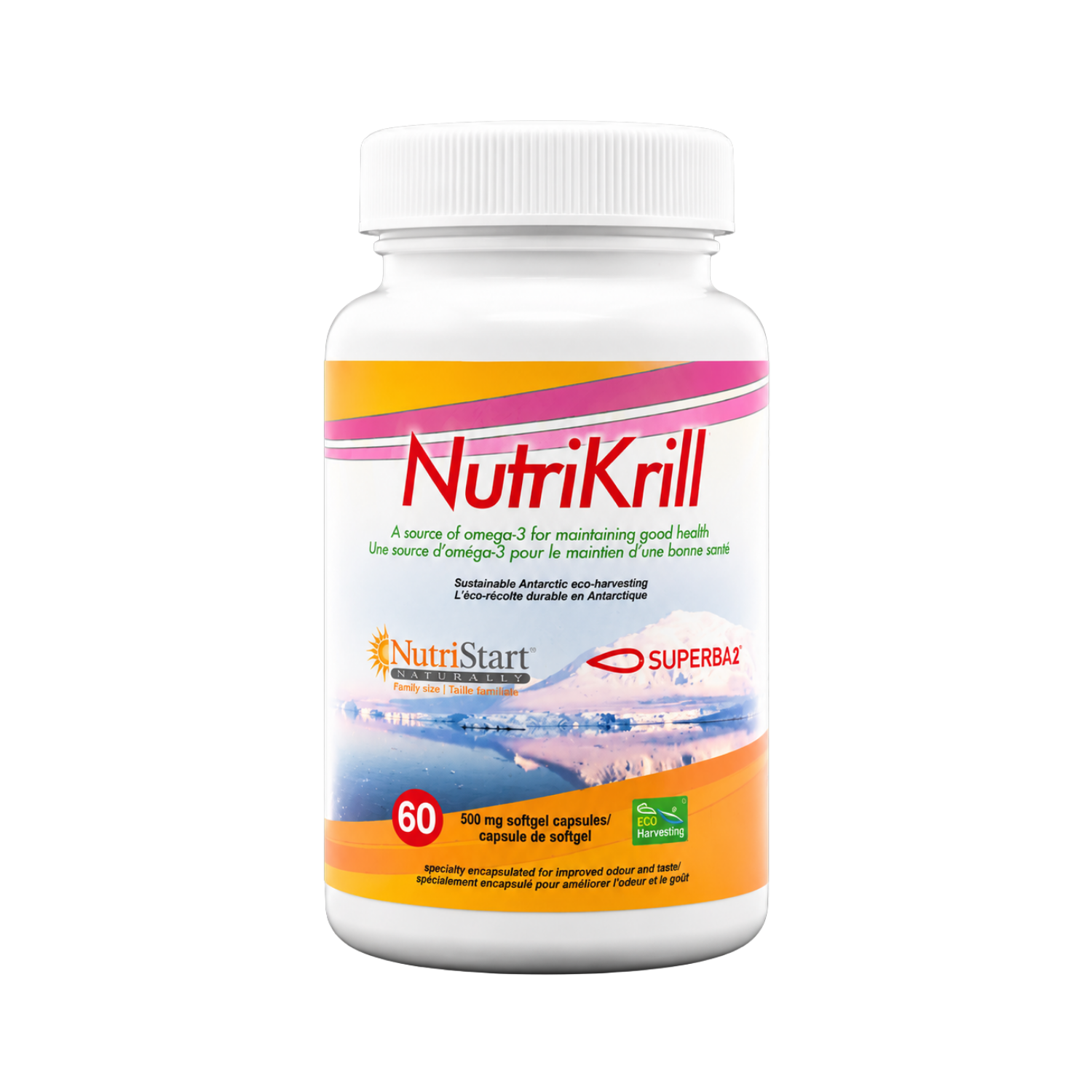
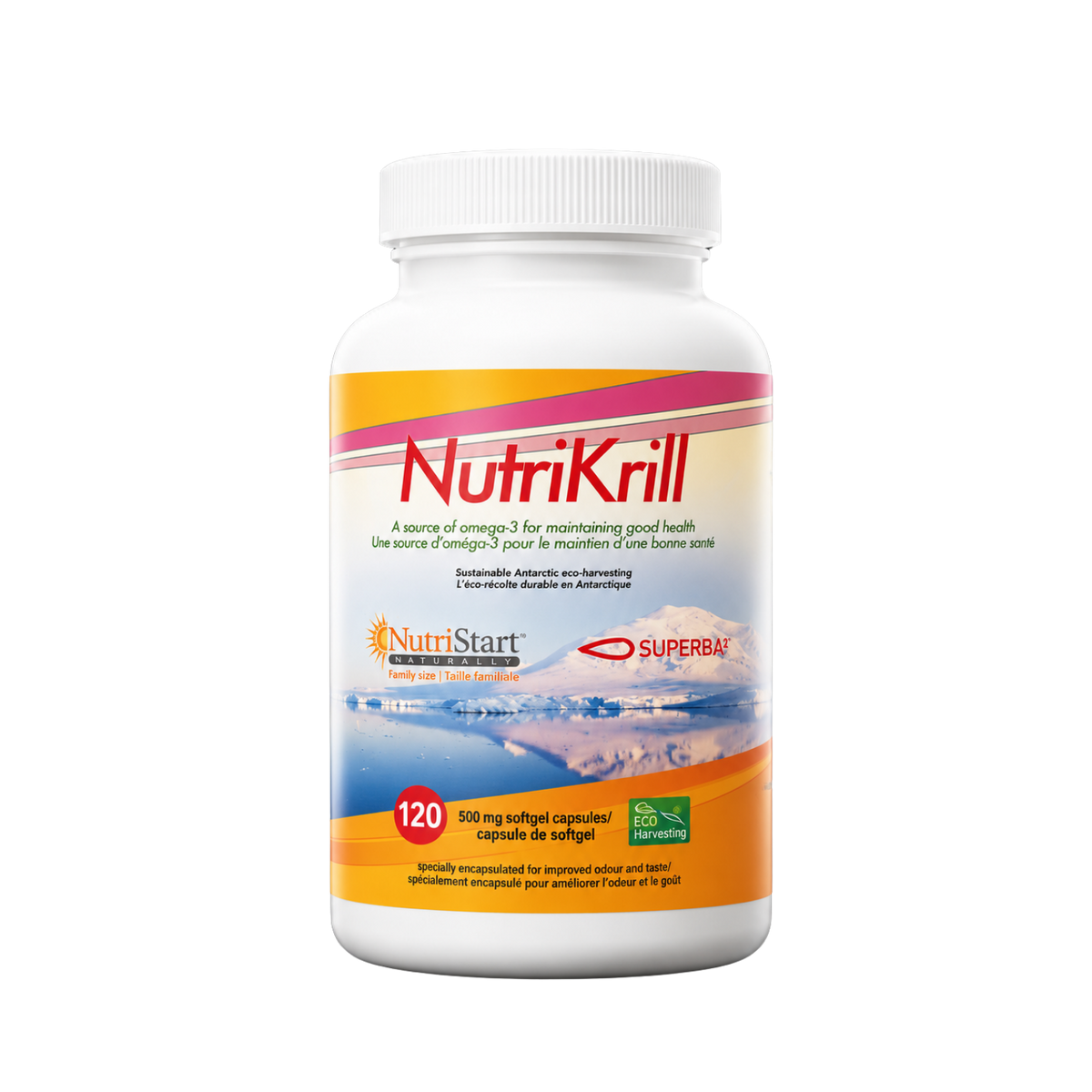
Nutrikrill
Regular price
$45.99
Regular price
100% Pure Eco-Harvested Antarctic Krill Oil
NutriKrill
Omega-3 — In a Different Form
Superba™ Antarctic Krill Oil • Phospholipid Omega-3s • Naturally Occurring Astaxanthin • Sustainably Harvested
NutriKrill is for people who want something different from another large-dose fish oil. Made with premium Superba™ Antarctic krill oil, NutriKrill naturally provides the important marine omega-3 fatty acids EPA and DHA largely associated with phospholipids, along with naturally occurring astaxanthin. It’s a compact, naturally complex source of marine omega-3—with a strong sustainability story behind it.
Why Choose NutriKrill?
- Premium Superba™ Antarctic krill oil
- Provides marine omega-3s EPA + DHA
- Omega-3s associated with naturally occurring phospholipids
- Naturally contains the antioxidant astaxanthin
- Supports cardiovascular health
- Provides naturally occurring choline-containing phospholipids
- Smaller, convenient softgels
- Generally less of the fishy experience associated with conventional fish oils
- Sustainably harvested Antarctic krill
- Marine Stewardship Council-certified source
- Available in 60- and 120-softgel sizes
- Health Canada licensed
- 100% satisfaction guarantee
What Makes Krill Oil Different From Fish Oil? Both krill oil and fish oil provide the marine omega-3 fatty acids EPA and DHA.
So what’s the difference? A major one is how those fatty acids occur within the oil. In conventional fish oil, EPA and DHA are typically carried predominantly in triglyceride or ethyl-ester forms, depending on the product. In krill oil, a meaningful proportion of EPA and DHA is associated with phospholipids. Phospholipids are naturally important structural components of cell membranes and have both water- and fat-compatible regions. That different molecular structure is one of the main reasons scientists became interested in krill oil in the first place.
The Phospholipid Difference- You’ll sometimes see krill oil marketed as being dramatically more absorbable than fish oil. The real science is more interesting—and more nuanced. Several studies have suggested that phospholipid-bound omega-3s from krill oil can efficiently increase levels of EPA and DHA in the body. But comparing krill oil directly with fish oil isn’t straightforward because products often contain different amounts and ratios of EPA and DHA. So we don’t think it’s responsible to tell you NutriKrill is “five times better absorbed” and therefore you only need one-fifth as much omega-3.
What we can say is this: Krill provides EPA and DHA in a naturally phospholipid-rich marine oil, and human research demonstrates that those omega-3 fatty acids are bioavailable. That’s a strong story without turning it into a marketing contest. EPA + DHA: The Reason Marine Omega-3 Matters EPA and DHA are among the most extensively studied fats in nutrition. They’re incorporated into cell membranes throughout the body and have important physiological roles.
EPA has been studied extensively in relation to cardiovascular and inflammatory biology.
DHA is an important structural fatty acid found in particularly high concentrations in the brain and retina.
Together, marine omega-3s are an established part of nutritional strategies for supporting cardiovascular health. NutriKrill provides them in the naturally complex lipid environment found in Antarctic krill.
More Than EPA and DHA- This is one of the things we like most about krill oil. If all we wanted to sell was concentrated EPA and DHA, conventional fish oil could do that extremely well. Krill oil is different because the oil naturally contains more than those two fatty acids. It also provides phospholipids, naturally occurring astaxanthin and choline-containing compounds. That makes NutriKrill a fundamentally different nutritional product rather than simply a smaller fish-oil capsule.
Naturally Occurring Astaxanthin-The deep red colour of krill oil comes largely from astaxanthin, a naturally occurring carotenoid. Astaxanthin acts as an antioxidant, helping protect lipids from oxidative damage. That’s particularly relevant in an oil containing highly unsaturated fatty acids, because those fats are naturally susceptible to oxidation. We think that’s the most useful reason to talk about astaxanthin. You may see extraordinary claims online about astaxanthin being hundreds of times “stronger” than other antioxidants.
Astaxanthin is a valuable antioxidant that occurs naturally alongside the phospholipids and omega-3s in krill oil.
What Does the Cardiovascular Research Show? Krill oil has been investigated in multiple randomized human trials. A recent systematic review and meta-analysis brought together 14 clinical trials involving more than 1,400 participants. Overall, krill oil supplementation produced statistically significant improvements in triglycerides, LDL cholesterol and total cholesterol.
Krill oil is a useful source of marine omega-3s with promising evidence for supporting a healthy blood-lipid profile and cardiovascular health.
What About Joint Health? This is an area where the research has become especially interesting. Earlier clinical studies produced encouraging results for krill oil and joint discomfort. A six-month randomized, double-blind trial involving 235 adults with mild-to-moderate knee osteoarthritis found a statistically greater improvement in knee pain with krill oil than placebo. The evidence for krill oil as a treatment for osteoarthritis pain is mixed. NutriKrill is an omega-3 supplement—not a replacement for appropriate treatment of osteoarthritis.
What About Choline? Krill oil naturally contains phospholipids that can provide choline. Choline is an essential nutrient required for several important functions, including normal cell-membrane structure and the production of the neurotransmitter acetylcholine. It’s another example of why krill oil is nutritionally different from a basic concentrated fish oil.
Sustainability Matters This was important to us before we ever decided to sell krill oil. Krill sit near the foundation of the Antarctic food web, providing food for whales, penguins, seals and other marine animals. So harvesting practices matter. NutriKrill uses Superba™ krill oil from Antarctic krill harvested from an MSC-certified fishery. The Marine Stewardship Council certification provides independent standards around sustainable fishing practices and responsible management. For us, sustainability isn’t a logo added at the end of the product-development process.
It was a requirement from the beginning.
Why NutriKrill Costs More Than Basic Fish Oil- If your only goal is getting the largest possible number of milligrams of EPA and DHA for the lowest possible price, a concentrated conventional fish oil may be the better choice. NutriKrill offers a different value proposition.
You’re getting:
Antarctic Superba™ krill oil
- EPA and DHA
- phospholipids
- naturally occurring astaxanthin
- choline-containing phospholipids
- certified sustainable sourcing
All occurring together in one marine oil. That’s why comparing krill oil with fish oil solely by looking at the number of milligrams of EPA and DHA on the label misses much of the point.
Who Is NutriKrill For?
NutriKrill may be a particularly good choice if you:
- Want to add marine omega-3s to your diet
- Want nutritional support for cardiovascular health
- Prefer krill oil over conventional fish oil
- Are interested in phospholipid-associated omega-3s
- Want naturally occurring astaxanthin alongside your omega-3
- Find large fish-oil capsules difficult to take
- Dislike the fishy aftertaste associated with some fish oils
- Care about responsible marine sourcing
- Want more than simply concentrated EPA and DHA
Ingredients
Frequently Asked Questions
Research
Health Canada License NPN 80022303
Health Canada License for Children NPN

Nutrikrill
Recently Viewed
Nutrikrill
Nutrikrill
Nutrikrill
Nutrikrill
Nutrikrill
Nutrikrill
Nutrikrill
Nutrikrill
Nutrikrill